Showing posts with label BusinessWeek. Show all posts

Sunday, April 25, 2010

Project managers and salary survey results

How much could you make if you went into project management? Bloomberg Businessweek recently published a story titled, "Inside Project Managers' Paychecks: Salary Survey Results." The data is from the Project Management Institute's (PMI) recently released 2009 Project Management Salary Survey.

Here's some interesting data:
The median base salary for a project management professional in the U.S. is $100,000. Three-fourths of survey respondents earn more than $84,000 per year, and one-fourth of survey respondents take home an annual base salary of more than $120,000.
PMI's salary survey also reveals what project management professionals earn according to a variety of variables, including:
* their title
* educational background
* whether they hold a PMP certification (and how long they've held it)
* the department they work in
* their industry
* the type of project they work on (e.g. construction, IT, R&D)
* the average size of their project team and budget
* gender (here we go with the gender-salary gap again!)
If you're curious, you can read the full Bloomberg Businessweek article here.

So how is this information relevant for physicians and other health care professionals who wish to pursue alternative careers? Project management is critical in every industry, but there are some industries where physicians may be expected to have stronger skills in project management. For instance, the health information technology or health IT industry is one particular industry where project management experience is very valuable. What type of experience you do you have managing an electronic health record (EHR) implementation? What about transitioning from paper orders to computerized physician order entry (CPOE) systems?

A difference of $3.5 million

There's a great story on Bloomberg Businessweek titled, "For Health Care to Work, These Doctors Need a Big Raise." It starts with this:
Specialists earn $3.5 million more, on average, than general practitioners over the course of a career. A federal panel wants to reduce the discrepancy.
In this story, James Warren writes how a family physician or general internist averages about $160,000 a year, according to the nonprofit Robert Graham Center. A specialist averages $267,000 (seems low to me). That means the generalist will earn about $3.5 million less over a lifetime.

If we do the math (sorry, I can't help it because I went to MIT), we'll see that the difference is $107,000 per year. If we continue to work backwards, we see that to get $3.5 million, the average doctor is working approximately 32.7 years in his or her career. Does that seem right? We must remember that a generalist has a 3-year residency whereas most specialists have a longer residency (anywhere from 3 to 10+ years if we're including fellowships). So, is this calculation accurate?

Thursday, April 15, 2010

World's best distance learning MBA programs

You won't find too many published rankings of online MBA programs. BusinessWeek lists online MBA programs, but they don't rank them. US News and World Report also lists distance learning MBA programs, but they also don't rank them. The Economist is willing to rate schools, but doesn't want to use the word "rank" since their list of schools is not exhaustive. In an online article titled, "Why distance-learning MBAs matter," the Economist says:
If, perhaps, the very top tier of universities are yet to offer distance programmes, still some very notable ones do: Carnegie Mellon or Thunderbird in America, Warwick or Insitito Empresas in Europe, for example.
You can view the complete report that includes ratings of selected distance-learning MBA programs by clicking here (PDF). Only 5 US business schools made it on that list and those were:
  • Carnegie Mellon (Tepper)
  • University of Florida (Hough)
  • Indiana University (Kelley)
  • Thunderbird School of Management
Two programs received a rating of "excellent" by the Economist: Florida’s Internet MBA and the International Executive MBA offered by IE Business School. Thunderbird School of Global Management, Indiana’s Kelly school, and the Euro MBA got honorable mentions and got "excellent" ratings for program content.

Sunday, February 21, 2010

Top Executive MBA Programs

Which list do you think of when you hear someone say "Top Executive MBA Programs"? Do you think about BusinessWeek? U.S. News & World Report? The Wall Street Journal? Financial Times? Forbes? The Princeton Review? The Economist? What's interesting is that some schools appear on almost every list of "top executive MBA programs." Do you know which schools I'm referring to?

Here are the top 5 according to BusinessWeek:
  1. Northwestern (Kellogg)
  2. Chicago (Booth)
  3. Pennsylvania (Wharton)
  4. Columbia
  5. USC (Marshall)
Here are the top 5 according to U.S. News & World Report:
1 Northwestern University (Kellogg) Evanston, IL
2 University of Pennsylvania (Wharton) Philadelphia, PA
3 University of Chicago (Booth) Chicago, IL
4 Duke University (Fuqua) Durham, NC
5 Columbia University New York, NY
Notice that Kellogg, Wharton, Booth, and Columbia are on both lists when you look at the top 5 programs?

Thursday, February 18, 2010

Health Care: Rx for MBA Job Blues

There's an interesting article on BusinessWeek titled, "Health Care: Rx for MBA Job Blues."

To grab your attention, you'll see this under the title: Health care is one of the few bright spots in an otherwise dismal job picture for b-school grads, and reform, if it happens, has the potential to make it brighter still

So, what types of opportunities are opening up for MBA graduates as the nation prepares for some significant health care reform? The article places a considerable amount of focus on health IT (health information technology) and electronic health records. After all, we're going to see $25.8 billion (or is it $36.5 billion?) set aside for health IT through the HITECH (Health Information Technology for Economic and Clinical Health) provisions found within American Recovery and Reinvestment Act of 2009 (ARRA). 
    Click here to read the BusinessWeek article.

    Friday, January 1, 2010

    The non-clinical job market in 2010

    The January 11, 2010 issue of BusinessWeek magazine has a section titled, "A Sobering Look at the U.S. Job Market." It doesn't look very good, considering that unemployment hit a 26-year high in 2009. Several states have unemployment rates that are above 11%. Most professional economists don't expect joblessness to return to its long-term average of 6% until well past 2011. The projected unemployment rate for 2010 is roughly 9.3%, with some projecting as high as 10.7%.

    The irony is that health care professions top the list of jobs expected to grow the most by 2018. Most of that growth will be seen in the nursing profession.

    Can you believe that even in this current economic situation, there are physicians who are choosing to leave clinical medicine to work in a non-clinical setting? Does that seem absurd? I don't think it's unreasonable, as long as people are informed about the reality of what they're about to face. They may need to find new jobs if they get displaced. Their position could get cut. Their company could fold. Physicians working in business are not immune to layoffs. In fact, I know quite a few senior and junior level physician executives who have had to find new jobs in 2009.

    As we enter 2010, it's important to have a clear understanding of the economic situation. The jobs are still out there, but there are fewer jobs. Salaries may not be as high as before. You may be expected to carry a heavier workload because your position could be the result of two positions merged into one.

    Friday, December 11, 2009

    Have you considered Medical Tourism?


    I never learned about medical tourism during medical school. Did you? Some may argue that medical tourism is one of the hottest medical trends to hit the globe. This week's BusinessWeek journal has a special advertising section labeled, "Health care gets the private treatment." It's about medical tourism.

    What is medical tourism? Well, let's see what Wikipedia has to say:
    Medical tourism (also called medical travel, health tourism or global healthcare) is a term initially coined by travel agencies and the mass media to describe the rapidly-growing practice of traveling across international borders to obtain health care. It also refers pejoratively to the practice of healthcare providers traveling internationally to deliver healthcare. Services typically sought by travelers include elective procedures as well as complex specialized surgeries such as joint replacement (knee/hip), cardiac surgery, dental surgery, and cosmetic surgeries.
    So why is this so appealing? Why is this such a hot medical trend?

    Part of the reason is because medical care can be quite expensive in the United States, but you may be able to get the same procedure for less somewhere else. Also, if you don't want to wait for your MRI or other diagnostic study, maybe you'd prefer to travel somewhere, enjoy a nice vacation, and get your long-awaited MRI. Some are predicting that medical tourism could jump tenfold over the next decade. So, there are many business opportunities in this space and I don't get the sense that the field is saturated (yet).

    If you're an entrepreneur, then perhaps you'd like to consider a business in the medical tourism industry. Be cautious. The illegal purchase of organs and tissues for transplantation have been alleged in certain countries and some argue that there are many ethical issues that must be considered when you think about medical tourism.

    Saturday, November 21, 2009

    The Best "Spare-Time" Business Schools (BusinessWeek)


    If you follow BusinessWeek, you'll see that they recently identified the Best "Spare-Time" Business Schools for 2009. It's hard to imagine having any spare time, isn't it? However, if you're a physician and you have plenty of spare time and you're looking for some business education, then you may want to consider these:
    If you're like many non-business physicians out there, you may not be very familiar with business schools (or B-schools). Although Executive MBA (also known as EMBA) programs are not full-time programs, they are not considered "part-time" programs because EMBA programs are structured very differently from traditional part-time MBA programs. Many business schools offer both a part-time MBA and an EMBA. The coursework structure in the traditional part-time MBA program is often a didactic classroom learning environment. In contrast, an EMBA program is generally more structured around team projects, case studies, group assignments, and the application of existing business knowledge among seasoned business executives. EMBA programs often have much higher tuition fees compared to part-time MBA programs.

    So what's the right fit for you? Perhaps you're considering an MBA that focuses on health care issues. Some MBA programs are designed with a concentration around medical management of general healthcare. For instance, Harvard Business School (HBS) has their Healthcare Initiative where you'll have the opportunity to "Interview with leading biotechnology, pharmaceuticals, and health services organizations." Now my discussion is moving away from part-time MBA programs, but perhaps a full-time MBA program may be a better fit for you. I'd love to immerse myself in a full-time program, but that's simply not a practical option for me at this phase of my life. Therefore, I'm considering several part-time and executive MBA options.

    What about you? Is business school on your radar? The funny thing is that B-school was not on my radar until roughly 3-4 years ago. I've spent the last few years doing research and this year I started visiting several business schools in my area.

    Tuesday, November 10, 2009

    The Shorter, Faster, Cheaper MBA (BusinessWeek)


    Have you considered an MBA? I've been researching MBA programs for several years now. There are so many different options! Perhaps you've seen some ads about accelerated MBA programs. Get your MBA in a year and save 50% on tuition. Sounds quite tempting, doesn't it?

    The problem for physicians and other health care professionals is that most of us don't have a strong business background. If you were a non-traditional medical student and you came from a strong business background, then you're probably the exception and not the rule. Physicians who went straight from college into medical school into residency and into fellowship lack a tremendous amount of "real world working experience." The clinical setting is not like the corporate setting. Some experiences and principles may translate into the working world, but most physicians really lack a strong business sense until they open up their own practice and realize how to balance the art, science, and business of medicine.

    Why are you considering an MBA? If you could freeze time and get an MBA for free, you'd probably do it, right? I doubt that most physicians can invest time for a two-year full-time MBA. You can probably devote some evenings and weekends for an executive MBA program. Some may be considering other forms of part-time programs and even distance learning programs.

    Read The Shorter, Faster, Cheaper MBA on BusinessWeek.

    Sunday, September 6, 2009

    BusinessWeek Top 50 companies to launch your career


    BusinessWeek has a list of 50 companies that are considered the "best places to launch your career." This guide isn't just for college grads. It could really apply to people who are in transition as well. I glanced at the list of 50 companies and I'd like to highlight a few that might be relevant for healthcare professionals who are interested in making the switch into the non-clinical world of medicine. Here are some of the companies that may interest you:
    • Goldman Sachs (investment banking): ranked #6
    • J.P. Morgan (investment banking): ranked #9
    • Accenture (consulting): ranked #11
    • Abbott Laboratories (health): ranked #13
    • Merck (health): ranked #37
    • Johnson & Johnson (health): ranked #41
    • Protiviti (consulting): ranked #49
    I realize that most physicians don't end up getting careers in investment banking. However, if you go into market research or if you pursue opportunities with venture capital firms, then you may have some significant interactions with investment banking clients. Who knows, maybe you'll even want to get an MBA in finance and go into investment banking.

    We all know that consulting is very popular. Have you considered the companies listed above? If you can't work at McKinsey, would you consider other options?

    Finally, in the health industry, the companies listed are no surprise. With all the mergers occurring in the world of biotech and pharma, we're sure to see displaced people in the upcoming months. Where will they end up settling?

    Saturday, August 29, 2009

    BusinessWeek Best Selling Business Book

    BusinessWeek has a list of hardcover and softcover business books that are on the "best selling" list. The book I'd like to highlight today is: Outliers: The Story of Success by Malcolm Gladwell. BusinessWeek describes it as, "The unexpected factors that lie behind success." You can purchase it from Amazon for less roughly $15 and it's ranked #1 on the list of hardcover business books.

    Wednesday, July 8, 2009

    Social Networking on BusinessWeek: Business Exchange


    Did you know that BusinessWeek has its own social networking section? I'm not talking about the blogs or forums. There's another section called Business Exchange where you can share links to blogs, news articles, and other interesting content. It can also connect with Twitter and LinkedIn and it's another way that you can broadcast yourself on the Internet.

    Right now, some of the most popular topics are:
    • US Economy
    • Twitter
    • Business Planning
    • Green Energy
    • Social Networking
    • Entrepreneurship
    • Economies of American Cities
    • Business Innovation
    Of course, they also have health-related topics such as:
    • Health Insurance Reform
    • Pharmaceutical Industry
    • Managed Care
    • Health Information Technology
    You can view my profile on Business Exchange by going here. To access Business Exchange: http://bx.businessweek.com/

    Monday, June 29, 2009

    Your Digital Profile


    I was tickled when I read the small yellow box on BusinessWeek: Your Digital Profile. It starts with: "Paper resumes are passé." Interested in a June 17 NPR segment about digital profiles? Consider these things: "LinkedIn profiles are a must, blogs a plus... no cutesy, joint husband-and-wife e-mail addresses, please... at least one executive looks down on AOL addresses... AOL was so 1998..."

    I remember having an AOL e-mail address. I think I still have one (but I never use it, so maybe it's gone by now).

    BusinessWeek needs to start using URL-shortening services like bit.ly or even tiny URL! I had to type "http://bx.businessweek.com/recession-job-search/reference" to get to the BusinessExchange discussion on this topic.

    Sunday, June 28, 2009

    Online job sites losing business to LinkedIn and Twitter?

    BusinessWeek has a story about some different online job sites. You can guess who's on the list:
    • Dice
    • Monster
    • CareerBuilder
    • HotJobs
    • TheLadders
    • LinkedIn
    What, no Twitter or Facebook? You'd be surprised to know that many people have been finding jobs on social networking sites over traditional job boards. "Twitter is immediate." That's why it's gaining such popularity among job hunters and executive recruiters.

    The biggest threat to traditional job boards may come from LinkedIn. Think of LinkedIn as Facebook with a "professional bent." It's essentially a social networking site that has been evolving to compete against traditional job boards. As a result, people are building some incredibly strong networks that are opening up doors of opportunity in various different industries. I've met all sorts of interesting physician executives and have also had the opportunity to do some professional matchmaking. "The networking even 'pushes' candidates to employers who meet preset criteria... while some LinkedIn members may not want to hear froma recruiter, they'll often send a message along to someone else in their network."

    So will Monster continue to stay at the top spot?
    • The PROS for Monster are: strong brand awareness; deep resume database.
    • The CONS are: expensive (for recruiters and companies, free for job seekers); too many unqualified applicants
    Perhaps if Monster teams up and forms some type of strategic parternship with a strong social networking platform, they will dominate the online job space.

    Saturday, June 13, 2009

    MBA Student Blogs

    Do you have any interest in business school (or B-school)? Thinking about getting an MBA? If you want to know what life is like as a business student, read some blogs written by MBA students. Some schools feature blogs written by students, professors and leaders. For instance, Thunderbird School of Global Management has a section titled, "Thunderbird Student Voices." There, you can read about the student experience from various MBA student bloggers around the world. Thunderbird President Ángel Cabrera, Ph.D. also keeps a blog called "Global Leaders Can Be Made."

    BusinessWeek also has a section called "MBA Blogs." Some topics that are being featured right now include things like: GMAT tips, making an MBA game plan, and more. You may want to take a look if you're considering B-school.

    Monday, June 8, 2009

    Digital Relationships


    Are you leveraging your digital relationships? BusinessWeek has this on the June 1 cover: "What's a Friend Worth? Decoding digital relationships will change how businesses market, manage, and recruit."

    If you're not actively building your social network, then you may be losing some potential opportunities. The earlier you start, the stronger your network will be. This article talks specifically about Twitter and Facebook and even mentions a New York company called 33Across, a firm that leverages social networks for marketing. In social networking, reciprocal communications are critical. This is one of the main reasons why people on Twitter choose to follow those who follow them. This is known as "following back." You can create a Twitter account in a matter of a few minutes and if you properly leverage this powerful social networking tool, then you may discover some tremendous opportunities for your personal and professional life.

    Friday, May 15, 2009

    UMass Amherst MBA in Medical Management


    As a member of the UMass Amherst alumni network (I got my MPH through UMass Amhers), I'm going to put in a plug for the UMass Amherst MBA in Medical Management. You should know that the UMass Amherst Isenberg School of Management has a partnership with the American College of Physician Executives (ACPE). That's how they promote their Online Part-Time MBA with a Focus in Medical Management. Recently, I've had a growing interest in business school. How about you?

    If you're interested in learning more, then click here.

    The Isenberg Part-Time MBA Program ranked 5th in the Northeast and 29th in the Nation by BusinessWeek.

    Saturday, May 2, 2009

    The U.S. has 3 Million Job Openings, but...


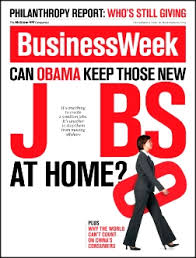
    I just got my copy of BusinessWeek. The front cover says, "The U.S. has 3 million job openings." It sure caught my eye. I quickly flipped to page 40 and started reading. The article starts with "... with 13 million people unemployed..."

    So, even if there are 3 million jobs, there are 13 million unemployed. This still puts us in a horrible situation. However, if you work in healthcare, then you should be glad that your category (along with education) is at the top of the list with 625 thousand jobs (3.2% rate of job openings). I've been meeting financial analysts and consultants who've chosen to pursue medical school or pharmacy school so that they can have more stability for the long-term future. Is that insane, or are they being wise? At the end of the day, it boils down to a number of personal decisions that impact family, career, and one's future.

    I'll be honest: this is probably not the best time to be transitioning from a clinical career to a non-clinical career (unless you stay within healthcare and work in medical management or healthcare administration). Let me make one other exception: if you pursue a career in health information technology (IT), then you have some real opportunities ahead.