Looking for a non-clinical job? Maybe it's time to pursue something in the health information technology industry. After all, Healthcare IT News is reporting that the health IT expansion will create thousands of new jobs in this country. You can thank President Obama for ARRA and HITECH.
So, will these jobs primarily be related to implementation, integration, etc? Will there be physician jobs as well? Or will most of these jobs be geared for nurses and non-clinicians? I've seen a trend where major health IT vendors are hiring physicians as members of a sales force. Physicians like to learn about things from other physicians. So, it makes sense that doctors are more likely to be open and receptive about electronic health records if they're hearing it from another doctor. So, if you don't mind traveling, then perhaps you'll enjoy working in health IT in the world of sales.

Showing posts with label economic stimulus. Show all posts
Showing posts with label economic stimulus. Show all posts
Monday, June 7, 2010


Wednesday, June 2, 2010
Government public health opportunities because of ARRA
Looking for a public health job? You can find some here on the NonClinicalJobs.com Job Board.
Communities Putting Prevention to Work (CPPW) is an initiative developed by the HHS. It's a part of the American Recovery and Reinvestment Act of 2009 or ARRA. The goal of the HHS initiative – Communities Putting Prevention to Work – is to reduce risk factors and prevent/delay chronic disease and promote wellness in both children and adults. The initiative was launched by HHS in a press briefing held on September 17, 2009.

$372.8 million, funded by the American Recovery and Reinvestment Act of 2009, has been awarded nationally to 44 communities, including cities, states, towns, and tribes. $120 million will support States and Territories in promoting wellness and preventing chronic disease through state-wide policy and environmental change for chronic disease prevention and to increase tobacco cessation through expanded quit lines and tobacco cessation media. $32.5 million will support state chronic disease self-management programs.
If you're thinking about a career in public health, get involved with your local public health organization as they leverage these stimulus funds to develop a robust CPPW initiative that focuses on wellness and disease prevention. Click here to view a list of grantees by state.
In the Philadelphia area, you may want to get to know Giridhar Mallya, MD, MSHP, Director of Policy and Planning, Philadelphia Department of Public Health and Project Director for CPPW.
Dr. Mallya will be giving a talk titled, "Creating Healthy Communities: Tobacco Use, Nutrition, and Physical Activity"
Wednesday June 16, 2010 from 6:30 PM - 8:00 PM (ET)
The College of Physicians of Philadelphia
19 South 22nd Street
Philadelphia, PA 19103
You can learn about Dr. Mallya's upcoming lecture here.
Communities Putting Prevention to Work (CPPW) is an initiative developed by the HHS. It's a part of the American Recovery and Reinvestment Act of 2009 or ARRA. The goal of the HHS initiative – Communities Putting Prevention to Work – is to reduce risk factors and prevent/delay chronic disease and promote wellness in both children and adults. The initiative was launched by HHS in a press briefing held on September 17, 2009.
$372.8 million, funded by the American Recovery and Reinvestment Act of 2009, has been awarded nationally to 44 communities, including cities, states, towns, and tribes. $120 million will support States and Territories in promoting wellness and preventing chronic disease through state-wide policy and environmental change for chronic disease prevention and to increase tobacco cessation through expanded quit lines and tobacco cessation media. $32.5 million will support state chronic disease self-management programs.
If you're thinking about a career in public health, get involved with your local public health organization as they leverage these stimulus funds to develop a robust CPPW initiative that focuses on wellness and disease prevention. Click here to view a list of grantees by state.
In the Philadelphia area, you may want to get to know Giridhar Mallya, MD, MSHP, Director of Policy and Planning, Philadelphia Department of Public Health and Project Director for CPPW.
Dr. Mallya will be giving a talk titled, "Creating Healthy Communities: Tobacco Use, Nutrition, and Physical Activity"
Wednesday June 16, 2010 from 6:30 PM - 8:00 PM (ET)
The College of Physicians of Philadelphia
19 South 22nd Street
Philadelphia, PA 19103
You can learn about Dr. Mallya's upcoming lecture here.
Wednesday, December 9, 2009
Should you leave clinical medicine?

If you're thinking about leaving the world of clinical medicine, consider the following:
- Once you leave, it may be virtually impossible to go back (this ultimately depends on your specialty and your willingness to go through a formal re-entry program).
- In general, there is more stability in clinical jobs compared to non-clinical jobs (especially during a recession).
- Health care may go through a major reform, but reform could also dramatically impact the pharmaceutical and device industry.
- You may have to accept a reduction in salary to switch from a clinical career to a non-clinical career (at least initially).
- It may take over 12 months before you successfully transition to a non-clinical job.
- You're probably going to be expected to generate many electronic documents (deliverables) in a non-clinical job. How strong are your computer skills?
- You may be required to travel if you accept a non-clinical job. Are you willing and able to travel frequently for business trips?
- Will you miss clinical medicine?
- Are you willing to report to someone who has less training/education? Will you have any objections if your boss is younger? What if your boss is a nurse or a pharmacist? (I'm not trying to generalize, but some men do have trouble following instructions from a woman. Plus in certain cultures, it can be very difficult for an older person to take orders from a younger boss).
- Are you 100% certain that you'll be happier working in a non-clinical setting?
- Will you have any type of regrets if you leave clinical medicine?
Tuesday, September 8, 2009
American Medical News mentions NonClinicalJobs.com

I was recently interviewed for an article that's now up on the American Medical News (published by the American Medical Association or AMA). The article is titled, "Job-hunting in a recession: It may take some searching." The article highlights how the recession is taking a toll in the physician job hunting community. Towards the bottom of the article, you'll see a discussion about non-clinical job opportunities for physicians who wish to leave clinical practice.
Since launching this website (nonclinicaljobs.com), I've been approached by numerous medical students, residents, and attending physicians who are exploring various types of non-clinical opportunities. Some are looking for part-time supplemental income. Others are looking for a career switch. A few months ago when I wrote a post about non-clinical mentorship, I was flooded by e-mails from people who were eager to receive some assistance with a career transition into the non-clinical sector of healthcare. The social network "Non-Clinical Healthcare Professionals" continues to grow with new members every week. This tells me that there is a strong and growing interest among physicians to find some non-clinical jobs.
To read the American Medical News article, click here.
Monday, July 13, 2009
Career coaching in health IT (information technology)

Would you be interested in receiving some "career coaching" advice from experts in the health IT field? Perhaps you're interested in switching careers but you don't know where to start. Maybe you've been involved in your hospital IT committee and you'd like to take your career to the "next level." Have you been thinking about a medical informatics fellowship? How about a master degree in medical informatics or in health information technology and information management?
Considering how much money will be directed towards health IT because of the HITECH provisions within ARRA, the world of health IT is a goldmine for tech-savvy physicians who are interested in pursuing non-clinical careers in this field. Perhaps you wish to learn more about: electronic health records (EHRs); decision support tools; personal health records (PHRs); tailored online messaging; disease management programs; quality improvement indicators; computerized physician order entry (CPOE); public health surveillance; natural language processing; algorithm generation; evidence-based decision support; e-prescribing; telemedicine; predictive modeling; decision support architecture and sharing; knowledge management; user-generated health information; mobile technology; data privacy and security; and much more!
If you'd like to have the opportunity to directly correspond with some health IT experts, contact me via e-mail because I may be able to help you. The other day, I had a nice phone conversation with a physician who had completed a Harvard-MIT Division of HST Biomedical Informatics Postdoctoral Fellowship. I know several other people who have trained in medical informatics and are currently working in both the private and academic sectors. I'm expanding my network and I'd like to help you get the advice you need if you're thinking about opportunities within the health IT space.
Saturday, May 2, 2009
The U.S. has 3 Million Job Openings, but...
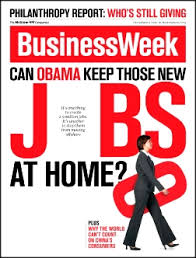
I just got my copy of BusinessWeek. The front cover says, "The U.S. has 3 million job openings." It sure caught my eye. I quickly flipped to page 40 and started reading. The article starts with "... with 13 million people unemployed..."
So, even if there are 3 million jobs, there are 13 million unemployed. This still puts us in a horrible situation. However, if you work in healthcare, then you should be glad that your category (along with education) is at the top of the list with 625 thousand jobs (3.2% rate of job openings). I've been meeting financial analysts and consultants who've chosen to pursue medical school or pharmacy school so that they can have more stability for the long-term future. Is that insane, or are they being wise? At the end of the day, it boils down to a number of personal decisions that impact family, career, and one's future.
I'll be honest: this is probably not the best time to be transitioning from a clinical career to a non-clinical career (unless you stay within healthcare and work in medical management or healthcare administration). Let me make one other exception: if you pursue a career in health information technology (IT), then you have some real opportunities ahead.
Thursday, April 30, 2009
Interested in the EHR Industry?
If you're interested in working in the EHR (electronic health record) industry, it's important to stay current on different strategies that surround EHR selection. Make sure you take a look at this: EHR Partners Program
Monday, April 27, 2009
Business Opportunities in Health IT for Clinicians

There's an interesting article in BusinessWeek about Health IT (or HITECH if you prefer). If you don't get BusinessWeek, then you should consider subscribing. The world of EHRs (electronic health records) and e-prescribing solutions will experience a major change over the next several years. However, it's also good to make sure that you're about to go beyond the hype of digital health. This article talks about how the UK is currently four years behind schedule in its initiative to digitize its government-run health system. Where will the USA be in four years?
If you have a strong interest in medical informatics, but you're not sure where to begin, then start by learning more about some of the major players. Specifically, here are some of the really big companies to research:
- Allscripts
- Cerner
- Epic
- GE
- McKesson
- Siemens
Subscribe to:
Posts (Atom)