Showing posts with label economy. Show all posts

Tuesday, July 5, 2011

Join President Obama on July 6 for a Twitter Town Hall meeting about jobs and the economy

What's been your experience using Twitter? Have you had the opportunity to encounter the President of the United States on Twitter? Join President Obama on July 6 for a Twitter Town Hall meeting where he will discuss current issues related to jobs and the economy.

Go to: http://askobama.twitter.com

Submit your questions: Just tweet your questions with the hashtag #AskObama

Follow @townhall
Get important updates and a reminder about the event the day before

July 6th at 2pm EDT, 11am PDT, to watch President Obama respond live via webcast

Make sure to follow @DrJosephKim for important updates from NonClinicalJobs.com

Thursday, January 13, 2011

Economics and Finance: From Theory to Practice to Policy

If you're in the Boston area, you won't want to miss this symposium as MIT celebrates 150 years:

Economics and Finance: From Theory to Practice to Policy

Thursday, January 27, 2011 - Friday, January 28, 2011
Location: Kresge Auditorium, 48 Massachusetts Avenue

This symposium will celebrate the role of MIT's faculty and students in advancing the fields of economics and finance, in putting the latest developments into practice, and in contributing to the design of public policy.

A series of six panels, which will include Nobel laureates, policy makers, and academic and industry experts, will address three broad questions:

* What are the key recent scientific developments and the major unresolved issues of economics and finance?
* What are the central challenges in economic policy?
* How can one assess the contributions of, and limitations of, recent advances in financial economics?

Faculty leads

* Andrew W. Lo, Harris & Harris Group Professor, Sloan School of Management
* James M. Poterba, Mitsui Professor of Economics
* Robert M. Solow, Institute Professor Emeritus, Department of Economics

Friday, January 1, 2010

The non-clinical job market in 2010

The January 11, 2010 issue of BusinessWeek magazine has a section titled, "A Sobering Look at the U.S. Job Market." It doesn't look very good, considering that unemployment hit a 26-year high in 2009. Several states have unemployment rates that are above 11%. Most professional economists don't expect joblessness to return to its long-term average of 6% until well past 2011. The projected unemployment rate for 2010 is roughly 9.3%, with some projecting as high as 10.7%.

The irony is that health care professions top the list of jobs expected to grow the most by 2018. Most of that growth will be seen in the nursing profession.

Can you believe that even in this current economic situation, there are physicians who are choosing to leave clinical medicine to work in a non-clinical setting? Does that seem absurd? I don't think it's unreasonable, as long as people are informed about the reality of what they're about to face. They may need to find new jobs if they get displaced. Their position could get cut. Their company could fold. Physicians working in business are not immune to layoffs. In fact, I know quite a few senior and junior level physician executives who have had to find new jobs in 2009.

As we enter 2010, it's important to have a clear understanding of the economic situation. The jobs are still out there, but there are fewer jobs. Salaries may not be as high as before. You may be expected to carry a heavier workload because your position could be the result of two positions merged into one.

Tuesday, September 8, 2009

American Medical News mentions NonClinicalJobs.com


I was recently interviewed for an article that's now up on the American Medical News (published by the American Medical Association or AMA). The article is titled, "Job-hunting in a recession: It may take some searching." The article highlights how the recession is taking a toll in the physician job hunting community. Towards the bottom of the article, you'll see a discussion about non-clinical job opportunities for physicians who wish to leave clinical practice.

Since launching this website (nonclinicaljobs.com), I've been approached by numerous medical students, residents, and attending physicians who are exploring various types of non-clinical opportunities. Some are looking for part-time supplemental income. Others are looking for a career switch. A few months ago when I wrote a post about non-clinical mentorship, I was flooded by e-mails from people who were eager to receive some assistance with a career transition into the non-clinical sector of healthcare. The social network "Non-Clinical Healthcare Professionals" continues to grow with new members every week. This tells me that there is a strong and growing interest among physicians to find some non-clinical jobs.

To read the American Medical News article, click here.

Tuesday, August 11, 2009

Emerging jobs poised for growth


As this country goes through major economic challenges, CNN/CareerBuilder has an article titled, "Seven emerging jobs poised for growth." Two of those seven jobs are in healthcare.

Let me focus on three of those jobs that are listed:
#2. Health informatics technician

Each time you go to the doctor, everything about the visit is added to your medical file. As health-care facilities everywhere make the change to electronic medical records, informatics technicians not only transition the files, but they use computer systems to help doctors analyze, diagnose and treat patients based on the information they are given. This computer data also improves care, controls costs and provides documentation for use in legal actions.

Industry umbrella: Health care
Job growth*: 18 percent
Salary**: $31,208

#6. Career counselor

Workers need jobs; employers need workers. With the present economy, career counselors are needed more than ever. They offer job seekers career guidance and job-hunting advice, and can to help them improve their well-being through their work.

Career counselors differ from a career coach in that not only will they help you in terms of your career, they will also seek to improve your overall mental health.

Industry umbrella: Human resources
Job growth: N/A
Salary: $47,074

#7. Patient advocate

Anyone who's ever had health issues knows that the health-care system is not the easiest thing to navigate, especially when you or a loved one is sick. That's what patient advocates are there for. As the population continues to age and health worsens, patient care advocates will become more important to the job market.

Advocates ensure that patients are informed, visiting with the right specialists and taking the right medicines, as well as educating family members on how to care for their sick relative. Perhaps most importantly, patient advocates will sort through medical bills and negotiate fees with health-care providers and insurance companies.

Industry umbrella: Health care
Job growth: 24 percent (for medical and public health social workers)
Salary: $47,560 (for medical and public health social workers), according to the BLS
So, do any of those sound interesting to you? I think the most potential lies in the health information technology (health IT) field. However, you have to be somewhat tech-savvy to really get into health IT. You don't necessarily need formal training in health IT or medical informatics, but such training would certainly be helpful.

You may also be wondering, why did I include "career counseling" in the list above? Well, the answer is because I see this area really growing within healthcare as physicians choose to pursue non-clinical jobs. If you're looking for career counseling services, please contact me because I may be able to help you. Otherwise, I encourage you to use this site as a resource and please tell others about it.

Tuesday, May 19, 2009

Occupational Outlook Handbook, 2008-09 Edition

I recently referred to a public salary website for Utah physicians (and other employees who receive taxpayer money for a portion of their salary). Some of the numbers seemed quite high, so I went to the U.S. Bureau of Labor Statistics Office of Occupational Statistics and Employment Projections.

There, I found this: Occupational Outlook Handbook, 2008-09 Edition: Physicians and Surgeons (here, you'll probably get a more "average" perspective on physician salaries.

The U.S. Department of Labor indicates that: "Many physicians and surgeons work long, irregular hours. Over one-third of full-time physicians and surgeons worked 60 hours or more a week in 2006. Only 8 percent of all physicians and surgeons worked part-time, compared with 15 percent for all occupations."

There's no doubt that many physicians work too many hours. It's no wonder that so many get burned out and choose a non-clinical career!

What was also interesting was the section on Job Outlook: "Employment of physicians and surgeons is expected to grow faster than the average for all occupations. Job opportunities should be very good, especially for physicians and surgeons willing to practice in specialties—including family practice, internal medicine, and OB/GYN—or in rural and low-income areas where there is a perceived shortage of medical practitioners... Employment of physicians and surgeons is projected to grow 14 percent from 2006 to 2016, faster than the average for all occupations." Wow! This growth will definitely happen because new medical schools are opening in the United States and we always have foreign graduates who doing their residency here in the U.S.

Did you notice how the U.S. Department of Labor refers to the "perceived shortage of medical practitioners?"

Saturday, May 2, 2009

The U.S. has 3 Million Job Openings, but...


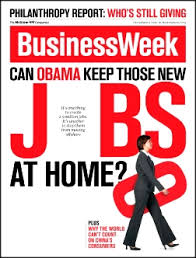
I just got my copy of BusinessWeek. The front cover says, "The U.S. has 3 million job openings." It sure caught my eye. I quickly flipped to page 40 and started reading. The article starts with "... with 13 million people unemployed..."

So, even if there are 3 million jobs, there are 13 million unemployed. This still puts us in a horrible situation. However, if you work in healthcare, then you should be glad that your category (along with education) is at the top of the list with 625 thousand jobs (3.2% rate of job openings). I've been meeting financial analysts and consultants who've chosen to pursue medical school or pharmacy school so that they can have more stability for the long-term future. Is that insane, or are they being wise? At the end of the day, it boils down to a number of personal decisions that impact family, career, and one's future.

I'll be honest: this is probably not the best time to be transitioning from a clinical career to a non-clinical career (unless you stay within healthcare and work in medical management or healthcare administration). Let me make one other exception: if you pursue a career in health information technology (IT), then you have some real opportunities ahead.

Monday, April 13, 2009

The Health Industry and the Stock Market

So much is changing in the healthcare industry. Have you spoken with your stock broker? If you're like me, then you probably try to do everything online. I'm a big fan of Online Trading. Why? Because it's so convenient and you can easily make changes easily by getting on a computer and logging in to your favorite Online Broker. It's easy for me since I'm always carring some type of computer around (usually an ultra-mobile PC that is connected to the Internet). The Internet has simplified so many things, including Stock Trading. It's hard to imagine what the world was like before we had the World Wide Web.

Who do you use to trade Stocks, Options, Mutual Funds, ETFs and Fixed Incomes? Pharmaceutical companies are merging, others are downsizing to reduce costs. Pfizer is merging with Wyeth. Schering-Plough is merging with Merck. Roche is aquiring Genentech. This may not be the best time to leave a job in clinical medicine to join the folks in pharma. With all these mergers and acquisitions, Stock Trading must be going crazy these days. The stock market has been in a downhill tumble and no one seems to know what's going to happen in the market. There is so much uncertainly about the current economy. What services or tools do you use for Online Trading?

Saturday, April 11, 2009

Health IT is an Integral Part of Healthcare Reformation

We will probably see some significant changes to the healthcare system in the next few years. The big push is on Health IT or HITECH, so let's see how doctors and other clinicians adopt to all this change. We all know that Health IT will play a major role in healthcare reform. The bigger question is: how will clinicians adjust to the changes in medicine and technology? Will they become more productive or will they reluctantly adapt so they don't get penalized? There are non-clinical jobs in health IT for clinicians who have that level of interest. Are you qualified?

Monday, March 30, 2009

Reductions in the Pharma Sales Force

According to a recent ZS Associates survey, the number of US sales reps has decreased 10% since 2007. We now have 92,000 pharma sales representatives and the prediction is that it will continue to drop to 75,000 by 2012. With all the recent news about mergers, I wonder how that will impact these numbers. Many doctors are unwilling to see sales reps, so pharma/biotech/medical device companies are looking for alternative ways to send their marketing messages. e-marketing has been one of these options that many companies have embraced.

Monday, March 23, 2009

Major Growth of Small Businesses

Because of the current economic climate, I think we will start seeing many different types of small businesses start to pop up everywhere. Corporate executives are getting laid off and many are having a difficult time finding a new job. Others are going back to full-time school with hopes that opportunities will be available when they graduate. Entrepreneurs are getting excited because our country is entering uncharted territory and there are some unique business opportunities. If you're a practicing clinician, you probably have more stability compared to people working in banking/finance/investments/etc. However, I feel that this is also a unique time for clinicians to put their heads together and come up with some opportunities to leverage the potential future needs/wants of doctors and other healthcare professionals who may face some major changes under this new administration. We all know that healthcare IT is moving forward with tremendous traction because of Obama. This includes EHR/EMR/PHR and other elements of health-related information technology. We also know that if some type of universal healthcare coverage rolls out, then primary care clinicians will have additional burdens placed on them. So, what are we to do? Start a company? Are you ready to take out a small business loan? Will the banks be willing to provide loans during times of such economic uncertainty?